
Outdoor spatial design directly influences guest perception, stay duration, and spending patterns across global tourism markets. A comprehensive report from the World Travel & Tourism Council reveals that over sixty percent of international travelers now prioritize accommodations with accessible outdoor spaces, open-air dining, and integrated natural environments. Modern hospitality operators no longer view exterior grounds as mere decorative surroundings or secondary architectural considerations. Instead, outdoor terraces, rooftop lounges, and garden courtyards serve as functional operational spaces that directly shape brand identity, increase revenue potential, and drive positive guest reviews.
When planning outdoor hospitality spaces, destination managers frequently compare traditional hardscaping barriers against adaptable green architectural solutions. Solid concrete partitions and masonry walls offer durability and acoustic control, but they often require substantial capital expenditure, create permanent visual blockages, and absorb solar heat during warm weather. In contrast, modular vertical frameworks and living plant barriers provide a more flexible alternative that balances privacy with natural ventilation. Integrating a decorative garden trellis allows property owners to demarcate distinct dining zones without constructing fixed walls or obscuring scenic views. Studies published by the American Society of Landscape Architects demonstrate that flexible open-work screens paired with climbing foliage maintain visual openness while giving guests a comfortable sense of personal space.
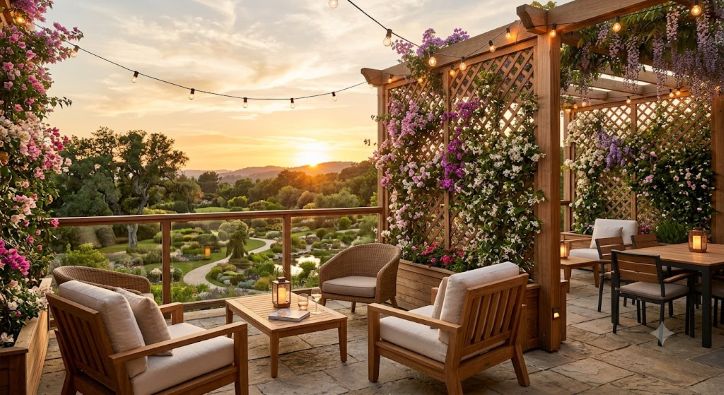
Comparing Landscaping Strategies for Guest Privacy and Comfort
To optimize guest experiences, resort designers and restaurant operators evaluate several distinct spatial layout strategies, each offering unique advantages and limitations regarding comfort, aesthetics, and operational efficiency.
- Solid Built Partitions: High stone walls, brick enclosures, and heavy glass panels deliver maximum wind protection and physical security. However, findings from the Cornell University School of Hotel Administration indicate that heavy structural dividers can make compact courtyards feel overly enclosed, restrict air movement, and raise surface temperatures during hot weather.
- Open Unpartitioned Layouts: Wide, open patio configurations maximize seating capacity and simplify staff movement across large service areas. Nevertheless, guest feedback surveys gathered by researchers at Cornell University show that completely unpartitioned dining spaces often result in lower satisfaction scores due to excessive ambient noise, lack of intimacy, and uncontrolled wind or sun exposure.
- Hybrid Green Screens and Vertical Lattices: Lightweight timber frameworks, freestanding metal panels, and vine-covered structures offer a balanced middle ground. These versatile dividers break up large seating areas into intimate dining pockets while allowing fresh air and natural daylight to filter through smoothly.
Enhancing Aesthetic Appeal and Usability Without Major Renovation
Upgrading physical infrastructure in established travel destinations often presents logistical challenges, high financial costs, and operational downtime. For these reasons, property managers increasingly adopt non-structural landscape enhancements that elevate visual appeal with minimal disruption to ongoing business operations. Modular vertical supports, decorative metal grilles, and containerized planting systems allow venues to reconfigure guest pathways and dining layouts efficiently.
These vertical framework elements provide reliable support for climbing plants such as star jasmine, bougainvillea, and English ivy, transforming plain concrete walls into vibrant green backdrops. Research from the Global Wellness Institute highlights that incorporating natural textures and living plants into public areas reduces psychological stress, lowers heart rates, and elevates overall mood among visitors. By integrating vertical greening elements into patio borders, hospitality venues cultivate memorable environments that encourage extended visits, higher food and beverage sales, and frequent social media sharing.
Influencing Commercial Performance and Seasonal Usability
Thoughtful outdoor design choices directly affect key performance metrics, including seating occupancy rates, average check sizes, and customer retention. Unprotected outdoor dining tables often remain unused during peak mid-day heat or cool evening hours, creating underutilized square footage and lost revenue. By incorporating microclimate management tools like shading foliage, wind-filtering panels, and mobile greenery, operators effectively regulate ambient temperature and light exposure throughout the day.
Data from the Urban Land Institute indicates that hospitality properties with well-designed exterior spaces report higher occupancy rates during shoulder seasons compared to properties with basic, unshaded outdoor areas. Furthermore, consumer behavioral studies published by the Journal of Travel Research confirm that environmental comfort directly correlates with higher review scores and increased brand loyalty. As more professionals blend work with leisure, adapting spaces to accommodate evolving bleisure travel trends allows hospitality venues to maximize daytime utilization and secure a lasting competitive edge in crowded tourism markets.
The Role of Exterior Architecture in Memorable Travel Experiences
As modern travelers continue to seek authentic, health-focused, and visually engaging travel destinations, exterior spatial design will remain a cornerstone of hospitality success. Thoughtful landscape architecture does far more than fill empty outdoor space. It guides guest movement, fosters social connection, and creates distinct micro-environments that leave lasting impressions on visitors. By choosing adaptable green structures, natural planting systems, and functional spatial dividers over rigid concrete barriers, travel operators create inviting atmospheres that elevate guest satisfaction and ensure long-term commercial vitality.